
ISO Adjusts your sensor's sensitivity to light. Lower it for more detail and when you have plenty of light. Raise it as your light source gets dimmer.
Shutter Speed How long your shutter is open allowing your sensor to be exposed to more or less light.
I know a lot or all of anyone reading this has read a book or about this somewhere else. The best thing I can suggest is, instead of going around shooting, pick a time of day. Choose 1 subject, flip over to M, look at your settings, take a picture. Make adjustments to ISO only, take a picture. What happened?
Ok, leave your ISO alone (bright day light flip it back to 100 or your lowest setting). Go to your f/stop. Lower it all the way (2.8 etc.). Your lowest f/stop is considered "wide open".
Seeing a trend here? Change one setting at a time, at the same shooting location at the same time. Look at what's happening to your shots. Practice, practice, practice. Make a conscious effort to focus what you've read in your books in to practice.
I really don't know how to explain how it "clicked" for me. Practice and paying attention to what was happening. I did just what I said earlier. I sat down and took about 50 shots of just one thing making changes one at a time. Went to the computer looked at the EXIF data. Read a lot, learned how to read a histogram, how to read the exposure reading on the camera. The +_|_|_0_|_|_- readout.
I hope this didn't make things more confusing for anyone and helped someone.
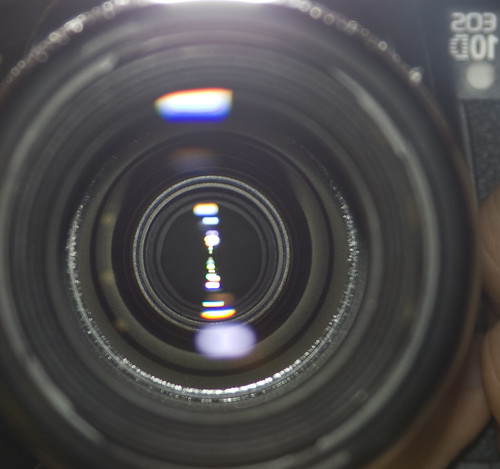
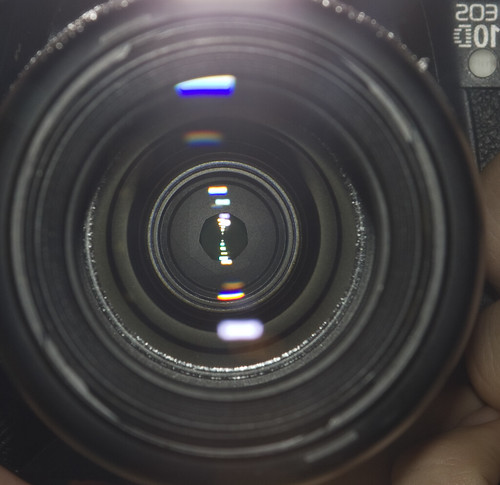
UPDATE: Meet Aperture. To get this thread flowing let's discuss what else we see different (not just the picture but description) besides the shutter.
F/5 ISO 100 1/200
F/10 ISO 100 1/200
F/25 ISO 200 1/400


WOW! This is simple to understand. now to just put it into practice...I will try what you have suggested and I bet I get it...I have been working hard to understand this for a week now, doing a lot of playing with the camera. LOL I'm even keeping detailed notes so when I feel I'm confused I just go back and read it again! Thanks for the tips! They are helpful. I'll let you know when it clicks! =-)
ReplyDeleteOk I did what you advised me to do...????? I understand FStop and the ISO now however when I took a couple of pictures of a turtle they came out dark..Some where unfocused...seems the camera liked the turtle's legs more than his face. What might I need to change to get a better image? Today was a cloudy day so the light was low and I had the F5.6 and the ISO 100, shutter speed was 50. Should I have bumped up the ISO to 200 and maybe increase/decrease the shutter speed? What I am having difficulty with is when I shoot they are coming out too bright or too dark, trying to find the medium. I will get it, just gonna keep practicing. Thanks again for the simplified instructions, they helped A LOT.
ReplyDelete